Showing posts with label Speaking Up. Show all posts
It is almost comical when it comes to suggestions on how to improve a photograph, the most common answers are - use a sharper lens, use a certain magical camera feature, use bokeh or add some mystical LUTs, filters or film simulation effect. Most of the times, these tricks do not even work. Instead of focusing on what you can do with your cameras, lenses or even editing skills, why not pay more attention to the subject and see if you can improve the following: lighting, background, composition. Even a single change of background can drastically improve an otherwise, failed, boring shot. An example shown in the cup of coffee here. 

The improved shot - find a darker background so the white cup pops out
I observe that photography is not merely a hobby for a most people, it has become a platform to chase gratification. Many seek attention and validation, especially through the sharing of their images on social media. How many likes will I get? How many comments saying "wow this is an amazing photograph!"? Will the post go viral and get 1000 shares? Photography in the internet age has been reduced to popularity contest and I hope that we can turn things around before it is too late. 

Image taken by Jon Low (IG @jonlow), used with permission
There is a weird mystery going on for a while now, every now and then I'd receive emails or comments on my YouTube videos with random people welcoming me back to Olympus and saying how they got heartbroken when I stopped using Olympus and glad that I have returned. It got me completely dumbfounded, because the truth is I never stopped using Olympus! I seriously wonder where this confusion came from, because I take a lot of pride in not being the photographer/content creator/influencer that changes his cameras as frequently as they change his underwear!

Image taken by Van Ligutom, used with permission. 
I have gotten this question more and more recently - Robin, why do you shoot with the LCD screen of your camera instead of the viewfinder? It was directed to me at the POV street shooting video on YouTube, with the purpose of the video showing how I composed my images before I clicked the shutter button. For sure, you would know that it is impossible for me to record the viewfinder if my eye was pressed on it while I was framing my shots, right? I thought it would be fun to record the moments before each photography was taken, with the action camera showing wide view of my surrounding as well as the LCD screen itself. Needless to say, this has nothing to do with my preference to shoot with LCD or EVF, the only way for this format to work was to shoot with LCD screen!

I find it amusing that people think those photo touts (as I have mentioned in my previous blog entry) are anything new. They have been around for so long, and the authorities have been battling them, you can easily find news coverage on this topic by Googling "photo touts Malaysia", you can find hundreds of matches dating years back. It is just strange that suddenly this made headlines in news portals outside of Malaysia, suddenly claiming that these are "street photographers" that the government has deemed illegal and tried to crack down in recent times. No, these photo touts are nasty, they deserved the harshest punishment possible and I am glad the authorities are stepping up their enforcement. However, myself and many street photographers out there, we still love to do what we do, and this news causing so much confusion had nothing to do with street photography!


Here is a little-known fact - Olympus claimed that the image sensor used in their first Four Thirds interchangeable lens DSLR camera, E-1 was a full frame sensor! It was mentioned in the official press release, official product descriptions and specifications pages on their website as well as a technical diagram showing the inner workings of the supposedly "full frame" sensor. Technically, it was a full frame sensor as there was nothing to crop from, the Four Thirds system was 100% newly designed digital system, unlike the traditional 35mm format that made a somewhat lazy transition to digital from film. I explained this and more, with plenty of evidence on how Olympus Four Thirds was a full frame, and how the original technology and innovations introduced in the E-1 have shaped the future of imaging, and were adopted by both Canon and Nikon in their respective RF and Z mounts when they went mirrorless full frame - using the same tech that Olympus introduced in the E-1 15 years prior! You can check out the video here (click). In this video, I am sharing my latest images from a shutter therapy session which I did with the Olympus E-1. 

I woke up to a heartbreaking news yesterday morning, on my YouTube notification I saw Ben's latest video on his The Narrowband Channel, titled "I May Have Only 3 Month Left to Live, Astrophotographer Fights On!". He has been battling stage 4 cancer for years now, and it has been really inspiring to see how Ben has stayed positive, doing his best to even churn out useful content on his YouTube for the community. The latest news was not so great, I shall leave it at that, if you want more information, you can always check out Ben's video yourself, he explained everything in great length there. The wife has started a GoFundMe page, so if you are able, please do consider contributing to Ben in support of his fight against cancer. Ben, if you are reading this, I am rooting for you mate! Stay strong, and I know you got this. 


Please support me & keep this site going:
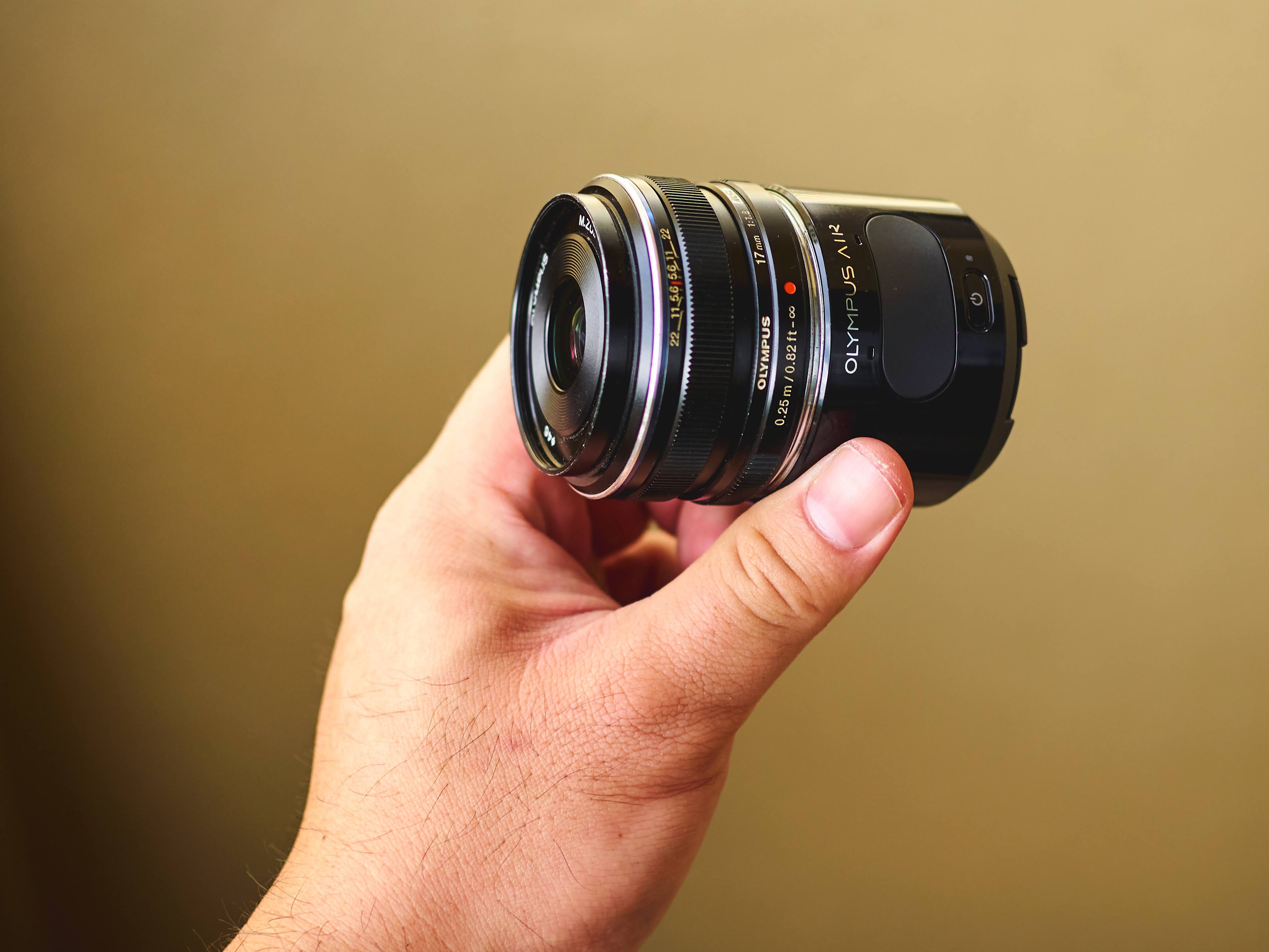
I am so sick of seeing camera manufacturers stripping away important features in newer cameras with the excuse of calling them "fun and more film like". The bitter truth is them trying to minimize production cost and maximizing profit, by removing hardware and crippling the camera, while still selling them at exorbitant prices. If we are seriously considering taking away features and make the camera "more fun", let's go to the far extreme - I am experimenting with the Olympus Air as a standalone shooting camera, with only a singular shutter button. Without the aid of viewfinder or LCD screen to compose a shot, without the ability to adjust camera settings, all I could do was just press the shutter button after aiming the camera blindly at my subject, this proved to be quite an interesting session. I got some really cool shots too! I did a video to show you how I captured those shots (no cheating) here. 

One of the many reasons I have stopped consuming content on Instagram is the similarities of all the images being showcased - it was as if everyone was trying to outdo everyone by copying what everyone else was doing. That is the unhealthy side of social media, it shows you certain expectations, and if you want to play the game you have no choice but to participate and do the same thing - shoot the same kind of images, with the same style and composition and finishing off with exact same post-editing approaches. The typical "film-like" look, or cinematic colors with orange vs teal tinge within a frame, or the expired film look, you get the idea. It is getting increasingly difficult to find original ideas to get inspiration from. Instead of trying to be authentic, many people just chose the easy way out - if you can't beat them, join them!

Image taken by Amir Shariff (IG @amirscamera)
Used with permission. 
Fujifilm launched their latest camera, the X Half that mimicked the film half frame shooting experience. If you know you know that it was Olympus who popularized the film half frame format back in the 1960s. Therefore, it was not surprising to find out that Olympus had some tricks up the sleeves on their newer cameras, particularly the Olympus PEN E-PL7 from more than 10 years ago. I am recreating the magic of shooting with X Half in the E-PL7, but applying a few tweaks and settings. For simulating vertical sensor, I applied 3:4 aspect ratio, to match the film simulations, I used Art Filters (Vintage I. II III and Grainy Film II), to replicate similar field of view, I chose the Olympus 17mm F1.8 lens. I shot in JPEG only, and all images were in portrait orientation, and you can find these and more tips in my latest video here (click). I am just sharing my images from this session in this blog entry, which I thought came out interestingly well!

I see too many friends and photographer peers obsessing about what other people are doing - worrying they are not doing enough or being good enough. They constantly stalk Instagram posts and stories, spy on each other's activities online, measuring how many more likes and engagements one has against another. I find this quite daunting, and honestly pointless. I have been off Instagram for more than a year, and I could not have been happier. Sure, my main IG account is still live, but I seldom post, and I follow no one, not even a single person. I think photography is about your own process of finding your stories and visual expression, it should not be about how people around you influence or dictate your actions and directions in your creative pursuit. Unfortunately, this is of course, easier said than done, and I have seen so many people being sucked into the never-ending void of depressing "why does he get more likes than me" disease. 

I love doing Live Streams. It was one of my latest projects that I got obsessed with, and I have been live streaming for more than a year consistently now. One of the feedback that I have received about my Live Streams - from people who watched it after the stream has ended - they are too long. They questioned if a topic of discussion needed 2 hours or more, and they even said these can be done in 5 minutes. I find it strange how in the world where free speech is encouraged, and everyone has an opinion, people can say all kinds of strange things.

I have been asked many times if I get creative burnout, and if I do, how do I circumvent it and is there any good solutions I have tried? Well, the answer isn't very straightforward, depending on several factors like - who is asking, the burnout happening on which front, whether it is the photographer side of me shooting images, or the writing and content creating side? There is no one answer that fits all. I personally admit that I have not experienced any severe burnout yet, in my years of running this blog, or dabbling in the universe of photography, but I do have a lot to say in this topic. 

Image taken by Jojo (IG @jojoelisan), used with permission. 
I do have to admit, in the last decade or so, I have gone through so many changes. From quitting my engineering job to working for Olympus Malaysia, then quitting Olympus and become a full-time photographer, then I started the YouTube channel, I guess the only constant in my life is obviously change. However, I am currently still a photographer, earning the bulk of my income doing paid shoots and assignments for clients. Therefore, it was incredibly amusing when more and more people have come up to me and asked how "life being a full time YouTuber" was like. I then told them YouTube is just a side hustle, and you can see the shock in their facial expressions. How, and why would people think I have become a full time YouTuber? On the contrary, should I take the dive and be an actual, full time YouTuber? There is a lot to unpack here. 

During my recent sharing on Rob Trek's YouTube channel, I had to do some homework, to dig up old photographs taken with Micro Four Thirds that I am proud of. You see, here is the issue - the images that I am personally happy with are not my best photography work. Allow me to explain - how do we describe great photography? Often times, these images include amazing moments, drama, excellent composition, beautiful lighting, creative play of artistic elements, you name it, there are many ways to create wonderful, impactful photographs that will "wow" people. When I look back at my own catalogue of works, yes I do have those over the top, dramatic, bombastic kind of crowd-pleasing images, but they are not my favorites. What ended up in my own "images that I am proud of" list were usually mundane, simplistic images that may not make any other people look twice. But these are my images, I like them for whatever reasons that may not be relevant to you, and I guess what I am trying to say is, sometimes we do what we do because we love doing it, not to please others. Of course, none of these images made it to the sharing session on Rob Trek's YouTube gathering Live Stream event. I am sharing just one of these images here, just one, to illustrate my point. You will be the happiest you can be if you just be 100% you. 


Please support me & keep this site going:

Credibility is very important to me. After all, I do share a lot of reviews, opinion and thoughts on imaging products and photography in general over the years. Why would people come and read my blog, or watch my YouTube video if I don't have any credibility at all? That's why when my credibility was attacked recently, I had no choice but to defend myself - after all, without credibility, there really is no reason for me to be here. This was one of the rare cases where I did need to make a stand and throw some punches. 

Since I have got some nice magnetic filters to play with for a bit, I thought it would be fun to do some long exposure, slowing down the shutter speed, capturing some motion of the flowing water. I was at KL Birk Park (yes, again) to test another product which will be mentioned on another blog entry, but it was just the perfect place to shoot the fake, man-made waterfall. Many people would be quick to point out that the OM System OM-1 that I was shooting with has built in Live ND filter, a computational trick to simulate the effects of neutral density filters, but the limit is at ND64, or 6 stops exposure. It was barely enough to achieve the silky smooth water effect, which required ND1000 (10 stops) or more, so I snapped on the 10 Stops ND on the Jetmag Pro magnetic filter kit, used it on my Olympus 12-40mm PRO, and took some 2 seconds hand-held images. 

When I started doing street photography, I put more emphasis on visual drama, capturing images that look appealing to the wider audience. It was about the use of strong colors, creative composition, play with interesting lighting and forcefully carve images that are striking on the first look. However, as I journeyed on many years further down the road, still doing street photography, I craved for deeper meaning in the images that I framed. Instead of just making images look stunning, I also found that it was equally important to tell a compelling story or idea through photographs. Is the content of the image more important than the visual appeal?

I have been on YouTube space for over 5 years now, making new videos week after week, but I don't see myself as a videographer. Yes, I am a content creator, or YouTuber, that part is very true as I share videos of me talking about photography related topics, but that does not qualify me as a videographer. It is strange that many people immediately associate YouTubers as videographers, which I believe are two completely different animals. I am a photographer, I earn a living doing photo shoots and jobs, and I share about my passion in photography through my videos published on YouTube (and of course here, this blog too, in more traditional article format). I am a photographer that utilizes YouTube as a platform to talk to an audience. However, there is a group of YouTubers who make videos about photography, who may not be photographers, and they seem to care little or less about photography at all, and I want to talk about these YouTube photographers. 

Image by Azul Adnan, used with permission
I see so many people chasing after latest and greatest gear and obsessing over technical perfection in their images. I personally believe that if you cannot get good images with your current gear, even if you upgrade to the next best camera, your images won't improve even a bit. You should upgrade your skills first before upgrading your gear. I also believe that using older, cheaper gear can help make you a better photographer. Going back to basics with simpler controls without the automated settings or 1000 different AF options, you have to truly master the basics and control the camera effectively to get your shots, without relying on the camera's "smart" features. Not having 1000MP or 1000fps burst shooting will slow you down and make you work harder around the camera limitations to get your shots. Using older cameras will sharpen your shooting discipline. I talk about this and more in my latest video here (click). I am sharing some of my latest work with the almost 20 years old Nikon D50 and Yongnuo 35mm F2 lens.