Showing posts with label Photography Tips. Show all posts
I visited my friends Azul and Grace's exhibition at Stadium Merdeka again and this time I brought more friends to go see it. I thought I'd make myself useful and started shooting behind the scenes images while both Azul and Grace did their short presentation sharing their shooting process for the exhibition images. I do make a bulk of my income from shooting event coverage, many behind the scenes images for my clients, and I want to share some tips on shooting effective event images. 

Establishing the location is important. 
Include several elements together - the speaker, the participants and other important subjects (the prints) within a frame to tell a larger, more complete story. 
I am revisiting a topic which I have covered 3 years ago, about fixing ISO at 200 for low light night shooting. This time, I did something differently as I brought along my HDMI video capture device, so I can show you what was happening through my viewfinder as I adjusted my settings and composed my shots. The main concept of this exercise was the same, we can get away with just ISO200 shooting hand-held, trusting the camera's powerful image stabilization. ISO200 produces perfectly clean results, optimized for sharpness, noise control, dynamic range, and color tonality. I highly suggest that you give it a try, just fix your camera's ISO to 200, and roam around at night in the city, capturing some awesome city scapes. 

I was shooting with Olympus E-M1 Mark III and M.Zuiko 12-40mm F2.8 PRO, the great combination for having a bit of zoom versatility, while the F2.8 bright aperture helps a lot in dimmer environment. Everything was shot hand-held, around Petaling Street area in Kuala Lumpur. POV video here (click). 

I hear a lot of people saying we should not go high ISO on Micro Four Thirds. While I agree larger sensor formats like full frame will always be superior when it comes to noise control at low light, high ISO environment, I don't see any reason why we cannot shoot high ISO with Micro Four Thirds. We should stop obsessing about high ISO noise, it is not the end of the world. and a good photograph is a good photograph regardless of noise. In my latest video on YouTube, I went to the streets at night and in many situations I needed to bump up my ISO up to 12800 to get my shots. You can see the new style POV video here, where I recorded my viewfinder screen, as if you were shooting with me on location!

E-M1 Mark III + 13-32mm kit lens shooting high ISO in low light
The most common obsession I have observed among photographers is to get clean high ISO shooting, and using Micro Four Thirds system is not exactly giving the best results as we know, full frame systems are superior when it comes to low light shooting. I am here to say this - do not let the limitation stop you or restrict your ability to capture great images. With or without noise, the images are more than just pixels and grains, what truly matters in photography are the subject content in the images, the expression and emotions and ultimately in many situations, the strong decisive moment. If you have all these even though your images are plagued with high ISO noise, you still deliver great results. 

If you do not intend to splurge on a dedicated macro lens, or you don't do too much macro but want the ability to get closer to your subject and achieve higher magnification, then extension tubes can be a great solution. They are cheap and effective, you can turn any lens into macro lens, even the budget lowly kit lens and you get great results out of this setup. The extension tubes are small, light, easy to store in any bag or carry around and they have electronic contacts that enable AF and aperture control while shooting. I find these extension tubes to be so fun to use, and why not get them anyways, even if you have a macro lens because you can achieve even greater magnification, using them on your macro lens! I think this accessory is a no brainer for any photographer, unless you have decided fixatedly that you are not going to do macro, ever. I made a video to show how the extension tubes work, you can find them here (click). 


I actually mistakenly said Extension "Rings" in the video, instead of tubes. I only realized the mistake during editing, and I did originally wanted to reshoot the entire talking head portion of the video. I then realized that would be too time consuming and I'd rather spend the time doing something else, shooting more photos, creating more content or discussing a different topic. That is the thing about making YouTube, I made so many mistakes as a one man crew and sometimes these mistakes cost a lot of time. I need to learn to be able to live with some imperfections. In this case, everything in the video is still valid, my photographs, what the extension "rings" can do, and advantages and disadvantages of using them. Other than the wrongly mentioned term, the video was good to go, so I decided to just publish it and hope for the best. 

As for this blog article, I just want to continue sharing the new images that I have shot. There is something different about viewing images in a website in comparison to seeing photographs in video format. Also, I believe photographs look better here - full JPEG representation minus all the possible compression due to video editing and YouTube's own algorithm to save storage space and bandwidth.


Please support me & keep this site going:
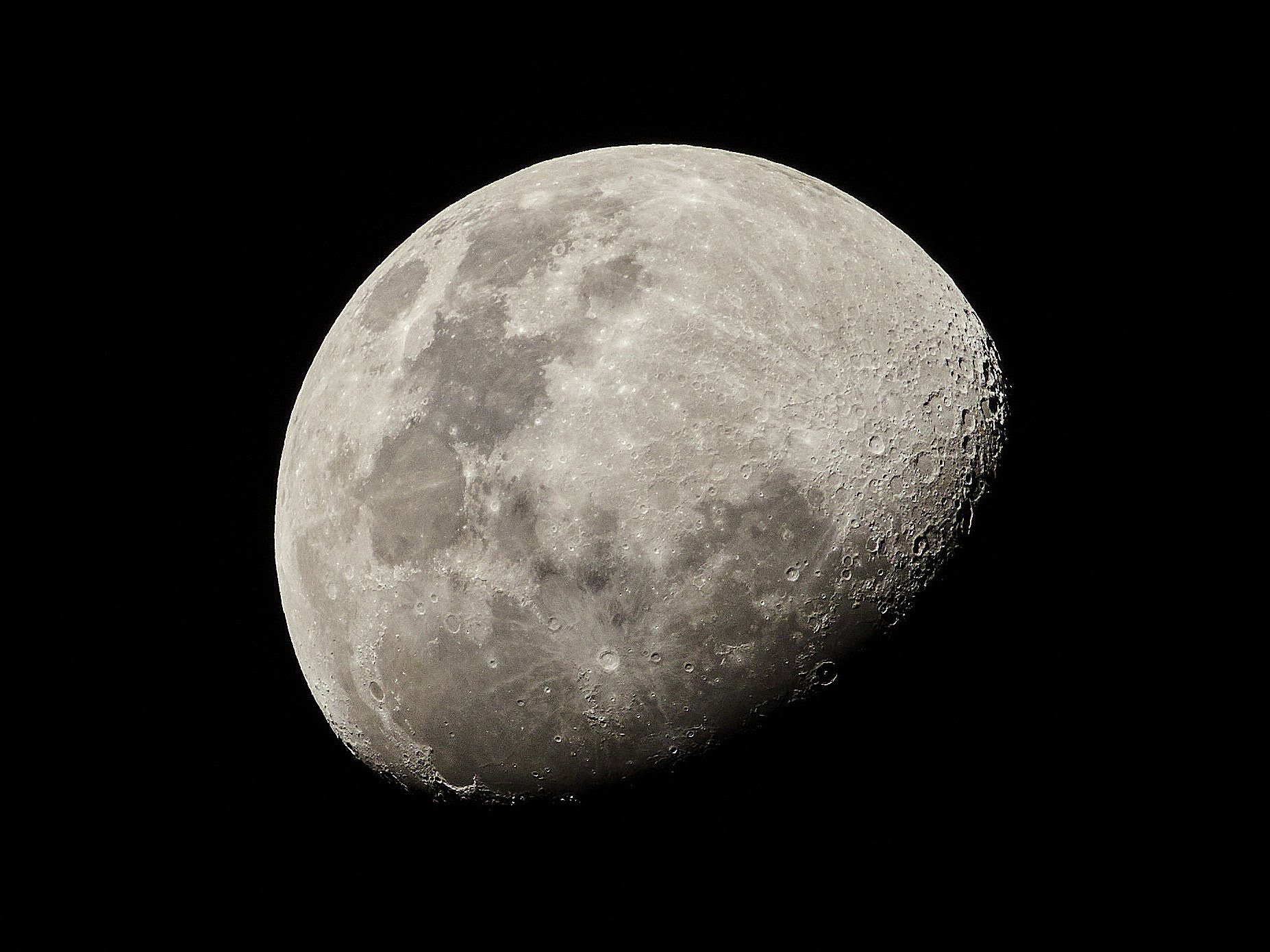
About half a year ago I was stuck in my tiny room during the lockdown and there was only so much I could do or shoot to create content. I saw the bright, round moon outside my window, and I decided to grab some shots. I then realized I have not made any videos or shared any tips on shooting high res moon shots, so I made a video demonstrating step by step on how to achieve a 50MP moon image. The video was never published until now, because I was not so keen on sharing content talking about a rock floating aimlessly in the sky, as honestly that is not my usual photography as well. I decided to start the ROBINSPEAKS podcast series which was short-lived, but I enjoyed making tremendously. Now revisitng this old content of the high res moon shot, I guess it would be a waste if I never put it out there. So here goes!

The video can be found here (click). 

Image shot with Olympus OM-D E-M1 Mark III and M.Zuiko 100-400mm F5-6.3
Of course this image was heavily cropped

Exact same image as the one above, but this was uncropped

LEFT: High Res Shot
RIGHT: Normal Shot

I used the hand-held high res shot to get the 50MP output. With just one click of the shutter button, the camera takes 16 images and then merges them all into a high res 50MP file, resulting in a highly detailed and sharp final output. The processing does take a bit of time but it is so worth the wait. And the fact that this can all the done hand-held without the aid of any support (tripod, monopod, etc), I find it quite amazing. This is one situation where resolution does matter, and the fact that Olympus has the lens that is powerful enough to resolve the details, is also quite an accomplishment on its own. 

Please support me & keep this site going:


I saw the moon outside my room window and I just could not resist the urge to pick up the camera and make some shots. After all the Olympus M.Zuiko 100-400mm F5-6.3 lens which is on loan from OMD World Imaging is still with me. Just within a quick minute, I got the following shot. Everything done hand-held, no tripod, monopod or any extra support needed. The magic of image stabilization, and modern digital imaging technology, you can capture subjects from a far distance with ease, right from the comfort of your own bedroom, without much effort. 

1/200, ISO200, F6.3
E-M1 Mark III and M.Zuiko 100-400mm lens
Hand-held

The trick here is to use spot-metering. And you will get fast enough shutter speed to hand-hold the long lens, even the Olympus 100-400mm lens with the furthest end at 800mm equivalent (in 35mm format), at 1/200 second shutter speed, it was a breeze considering we do have powerful image stabilization to help steady the shot. The image show above is heavily cropped of course, I did not have any of the tele converters with me, but even the cropped image revealed plenty of good details and impressive contrast. 

Some people said that they don't see the Olympus 100-400mm resolving fine details, referring to my previous blog entry/YouTube video on bird photography at KL Bird Park. I was like... how many more fine details do your eyes need to see? Yes, the PRO lenses like 300mm PRO, or most possibly the newer 150-400mm PRO will give you better details resolving power, but to say that this lower level 100-400mm cannot resolve good enough fine details, and does not have good enough sharpness, is a laughable conclusion, considering I have shown so many examples proving just the opposite. It is sharp. It is not that easy to get such pin-sharp results, but you can get it, if you put in enough effort, and know what to do with the lens. A 800mm equivalent lens is definitely not for everyone. 

While the size may not be ultra portable, but this combo is perfectly hand-holdable, and handling wise, there is zero issues. 

I really can't wait for this current semi-lockdown situation in Malaysia to be over. From the looks of it, I doubt that can happen any time soon. The government has just announced stricter measures to be implemented in a few days, signaling the longer battle ahead, and lockdown that will not be eased any time soon. I have a strong feeling that if the number of daily active new cases does not drop drastically soon (currently hovering above 6000 new cases daily in Malaysia, inching closer to 7000 cases), it is no surprise a total lockdown as seen from last year's first March Movement Control Order (MCO) will be enforced. It is inevitable. I don't see how the current measures are sufficient to bring the numbers down. 

That also, unfortunately means, I won't be having much opportunity to shoot fresh images and make new contents. 

Wherever you are, I hope you fare better than me here. If you have a camera and you are free to go out to shoot, don't take that for granted. Go out and take more photographs. For me please. 

Please support me & keep this site going:
Considering the entire country is under lockdown and there is nothing much I can do, I was digging through my photography archives and found these set of portrait shots of Carmen Hong that I have taken for the review of Olympus OM-D E-M1 Mark III quite recently. I thought it would be a good idea to explore simple, lifestyle/casual portrait photography and I can certainly share some tips on how to do that here. Carmen is an amazing friend and a talented photographer herself and of course she uses Olympus system. She has volunteered to be the model to test out the new Eye/Face AF tracking feature on E-M1 Mark III which helped greatly in my review of the camera. Special thanks to Carmen for being such a sport, and also Jackie Loi for some behind the scenes footage of me in action in the video (click here). 


For any portrait photography, it is crucial to maintain a healthy and open communication between the photographer and model. It is important to listen to the model and not get her to do anything uncomfortable during the shoot. I highly encourage the photographer going into any portrait shooting to prioritize respect above all else. 

This is not a professional portrait shooting tutorial, but this may be a good guide for you if you are new to portrait photography. Remember, there is no right and wrong when it comes to shooting people, and my tips are aimed to simplify the shooting process by addressing some critical considerations that a portrait photographer should take care of. 

1) Use longer lenses
I highly recommend to start with telephoto lens for portrait shooting. The longer lens helps to get rid of excessive perspective distortion which can render very ugly looking human images. The perspective exaggeration due to wide angle use normally cause disproportionate looking limbs, legs appearing longer or shorter and also head looking weirdly big in comparison to the overall body size. To maintain a more flattering look on the subject, a long lens helps to minimize any odd perspective. Also, a long lens typically means you have less background to work with, having the compression effect to your advantage, aiding cleaner and simpler composition. On the other hand, a longer lens can create shallower depth of field, able to blur off the background more effectively than wider lenses. My primary lens for this particular shoot was the Olympus M.Zuiko 75mm F1.8 and also 45mm F1.8. 

2) Make Sure The Eye is in Focus
I know a lot of photographers are taught to use center focus and recompose method, but this technique should not be used for critical portraiture work, especially if you use long lenses with wide open aperture. Shooting with, say an Olympus 45mm F1.8 at a close up distance, the risk of miss-focusing due to focus and recompose is extremely high. I highly recommend that you shift the focusing point and place it exactly at the eye of the subject in your frame. Olympus cameras generally have reliable face/eye detect AF, but other than E-M1 Mark III, I still manually move my focusing point each and every time I shoot any portrait shot. For E-M1 Mark III, especially for this particular session, I just relied on the camera's newly upgraded and improved face/eye tracking AF, it nailed the eyes consistently throughout the entire shooting duration. 

All images in this blog entry were shot with Olympus OM-D E-M1 Mark III and M.Zuiko lenses 12mm F2, 45mm F1.8 and 75mm F1.8

Use of longer lens can render shallower depth of field, combined with wide aperture. 

With a longer focal length, there is less background to deal with, having that "telephoto compression" effect. 

For more "professional looking" result, always opt for longer focal length. I'd highly recommend the Olympus M.Zuiko 45mm F1.8 (or the F1.2 PRO if you can afford that), or the 75mm F1.8


3) Use wide angle lens
This may contradict the first tip, but if you have an interesting background that can add to the story, to create an environmental portrait, then using a wide angle lens, such as at 14mm or 12mm wide end of your lens can be an effective way to tell a story. Just be careful not to fit anything that may not necessarily add any value to the photography, shooting wide angle is challenging because often times you may accidentally include something that can destroy the image. Just watch the frame from edge to edge and corner to corner, and make sure the background builds up the story, not take away the story. 

4) Adopt Creative Composition
To make an interesting portrait photograph, you can always make use of the environment and your surrounding to amplify the impact of your final image. For example, I always like to add reflection into the frame, finding reflective surfaces such as a puddle of water, a window, glass or metal walls to make the image a bit more dramatic. I also play with lines, repetitions, patterns, geometry, light and shadow, or anything interesting within my frame to add something extra to the composition. 


I always find ways to include a reflection to make the shot look more intriguing. 

Whenever there is a repetitive line, it works very well for composition too. 

The neutral grey tone and the vertical lines work very well against Carmen's flesh tone as well as her red dress that pops out of the frame. 

Playing with shapes and framing here, placing Carmen in the middle of the arch opening of the building, creates a natural framing around here. 

Repetition and framing used in this simple composition, Carmen is placed in between two columns, which immediately highlights her in the frame. 

Leading lines is a tried and tested technique, have been overused but is super effective way of drawing attention to your subject. The line of the hand-rail leads you directly to her right arm, which then points to her face/head. 


I don't use wide angle a lot, but if you have an interesting background, wide angle can help make a strong visual story-telling. 

Just be careful not to include distracting elements if wide angle is used. 

5) Lighting
For simple, outdoor portrait, I generally keep my setup minimal and I do not carry a lot of gear with me. I don't quite like to use strobes or flash on outdoor shoots, unless I want to create certain effect or look, or if it is demanded by clients. I also do not like to work with reflectors, I have seen many wrong execution of reflector causing light to shine unevenly, causing very unnatural looking skin tone. When I was shooting Carmen in this session it was an overcast day, the clouds completely covered the sky. The light was flat, even, dull and honestly quite uninteresting. Nevertheless, that meant that I can have very nice and pleasing looking skin tone. Else I would have to find shades to do most of my shoots, and find creative ways to work with harsh light. 

6) Communication, and shooting with LCD screen
Communication is key in any portrait shooting, you have to interact with your model. One way to improve your communication is not to shoot through your viewfinder all the time. When you shoot through your camera's viewfinder, you are blocking your face, the model, posing while looking at you and listening to your direction cannot see your facial expression. There is no eye contact. That is poor communication if you ask me. One simple and effective way to improve this situation is take the camera away from the eye level, use the LCD screen and when you talk to your model look her in the eye and make sure your instructions are clear. Any improved communication can enhance the outcome of the portraits you are taking. 


I hope you have found these sharing useful, and if you have friends who are starting out on portrait photography, why not share this blog post with them? If you have more tips to share about basic portrait shooting please leave them in the comments. 


Please follow me on my social media: Facebook PageInstagram and Youtube

Please support me and keep this site alive by purchasing from my affiliate link at B&H. 
Rule of Thirds has become the default go to recommended guide for beginners when it comes to composition but I personally believe there are other more practical tips to help you compose your images better. Composition is an important consideration for all photography, it can either make or break the shot. I have nothing against Rule of Thirds, I think it works for most cases but I also believe composition is more than just drawing some invisible lines in your frame and place your subjects along these lines. There are other more important things to consider doing proper composition if you want to step up your photography game, and I am exploring these practical tips. 

1) WHAT IS THE MAIN SUBJECT?
Too many newcomers to photography focused on how to shoot the subject, not many asked the more important question - "what is the main subject?"

The techniques in shooting can only get you so far, if you have not identified the main story, the idea,  message or emotion that you want to convey in your shot, that image will end up looking quite empty. Instead of thinking too far ahead, I strongly suggest you identify the main subject first, and do all you can in ensuring that your viewer's attention is drawn to that main subject. 

2) TAKE CAMERA AWAY FROM EYE LEVEL
We all love shooting from the viewfinder, but when we do that, we create images that look very ordinary and plain because everyone is standing at almost the same height and seeing the world through similar perspective. Therefore, one effective way to immediately create images that look a little different is to show them from a different level. Move the camera away from the eye level and start using the LCD screen to compose your shots. Most cameras these days do come with some sort of tilt or swivel screen which allows easy shooting from the waist level or even lower. Go as low as to the ground level to create some impactful shots looking up, or climb stairs, a hill or anywhere giving you a higher vantage point overlooking a vast area for a more dramatic outcome. Go high or go low and you will see that the composition will be stronger than just shooting everything through the viewfinder. 


3) CREATIVE FRAMING
There are many ways to direct attention to your main subject in your photographs that does not require drawing crazy many invisible lines that do not make sense. Forget the lines. Look for more practical methods to frame your subjects and here are some suggestions - use lines, patterns, repetition, color and geometry, the art basics for composition. Most of the creative framing opportunities are right in front of us, we just have to spot them and use them effectively to frame our main subjects in the photograph. Being able to see and identify these opportunities may present a challenge for many as they may not know what to look for in the first place. Then train yourself to see things more beautifully and do your best to find the beauty even in the simplest and normal every day things. Photography is not about capturing epic moments or visuals only, photography is also about finding beauty even in the most ordinary things, and should be a continuous effort that is done consistently. 

4) PAY ATTENTION TO THE BACKGROUND
I have observed many images that are greatly composed but somehow the photographer did not pay sufficient attention to what goes on in the background. The background can mess up your shot. Ask yourself if you do want to include the background to your main subject, which background to include if you have a choice (most of the time you do, by shifting the angle away to a different direction where you point your camera at), and how much background you want in your image. Avoid strong glaring colors like red and yellow that may distract the attention away from the main subject easily. Avoid unpleasing looking objects like rubbish bin or anything messy in the background. If the background adds to the main subject constructively, supporting the story-telling element, such as an environmental portrait, then compose the background carefully to enhance the image. Otherwise, take the background out and include as little as possible. 


5) FILL YOUR FRAME BUT ALSO LEAVE A BIT OF SPACE
If your photography is not good enough you are not close enough, the famous saying has been repeated countless times and still holds true. Fill your frame and your main subject will immediately become dominant. However, do not go too close, do leave a bit of room to breathe. In some cases when it is difficult to predict the movement of the subject (sports shooting, birds flying, etc) framing the subjects too tightly may unintentionally chop off some important parts of the subjects. Also, having a bit of room to breathe is not a bad thing, you may crop in a little during post (don't over do it) or straightening a slightly uneven shot will benefit from that extra bit of headroom. 

That's all I have to share in this blog entry, I acknowledge these are simple tips, but I am sure they can be effective in bringing out the best in many photography situations. I sure hope you have found them useful, and if you have more to add, please share in the comments below. 

Please follow me on my social media: Facebook PageInstagram and Youtube

Please support me and keep this site alive by purchasing from my affiliate link at B&H.